CatLight
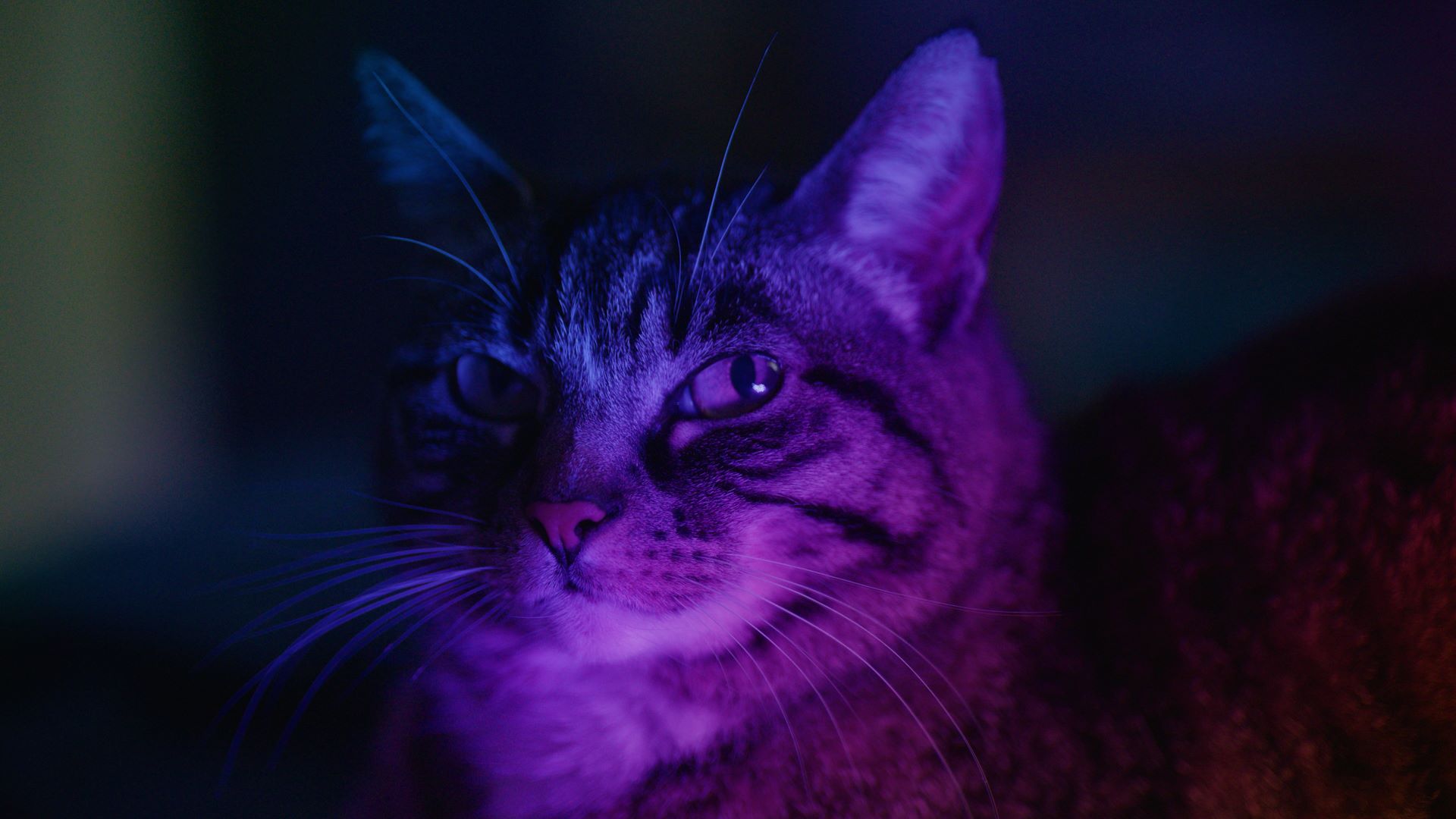
Photo Project
◆July 2023
About
Photo Project
◆July 2023
I've been a huge visual effects nerd since I was young. I often hear about new technologies and methods in VFX and want to try them out, but since I don't have access or the money to replicate them myself, I figure out some small-scale way I can take the same idea and make something of my own. This project is very loosely inspired by Satellite Lab's PlateLight system.
What is PlateLight?
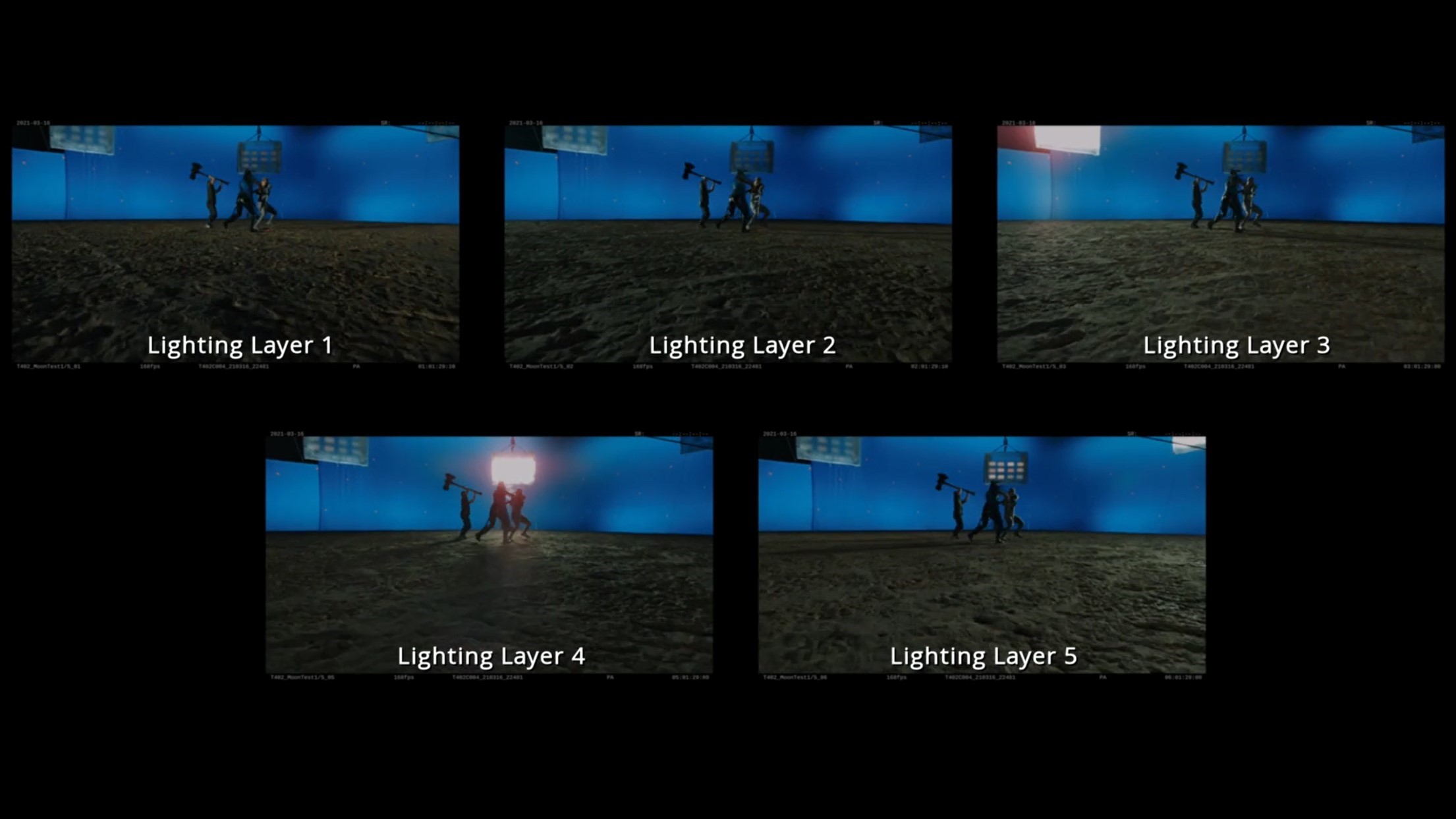
In early 2023, I heard about a fascinating lighting system that was used for the final fight scenes in Thor: Love and Thunder the year before. The scene takes place on a small planet that's spinning so fast that its sun goes across the sky in less than a minute, creating constantly changing light conditions. Marvel, wanting to be able to change the pacing of the scene in post-production without having to worry about the sun being in the wrong place, commissioned Satellite Lab's PlateLight system.
PlateLight is a system where multiple lighting conditions can be shot in camera at the same time by quickly strobing the lights in sync with the camera's frame rate. For example, you could shoot a scene at 48 frames per second, and have one lighting environment for all odd numbered frames and a different one for all even numbered frames. Then, in post-production, you separate every other frame to create two clips of the same moment from the same camera but lit two different ways. Those Thor scenes used this technique to create five simultaneous lighting setups, giving them the flexibility to cut the scene in different ways and keep accurate lighting throughout.
My loosely inspired idea
I don't have a huge studio with a state-of-the-art lighting system, or the equipment to sync my cameras up to a strobing light, or even a film project that would require this, but I was inspired. What I do have is a nice camera, a strip of LEDs with a setting that changes the colors pretty fast, and a cat that I hoped I could get to stay still. My idea was to get a bunch of identical photos of her with different colored lighting, then stitch them together to create an image where she's lit in a way I couldn't get practically.
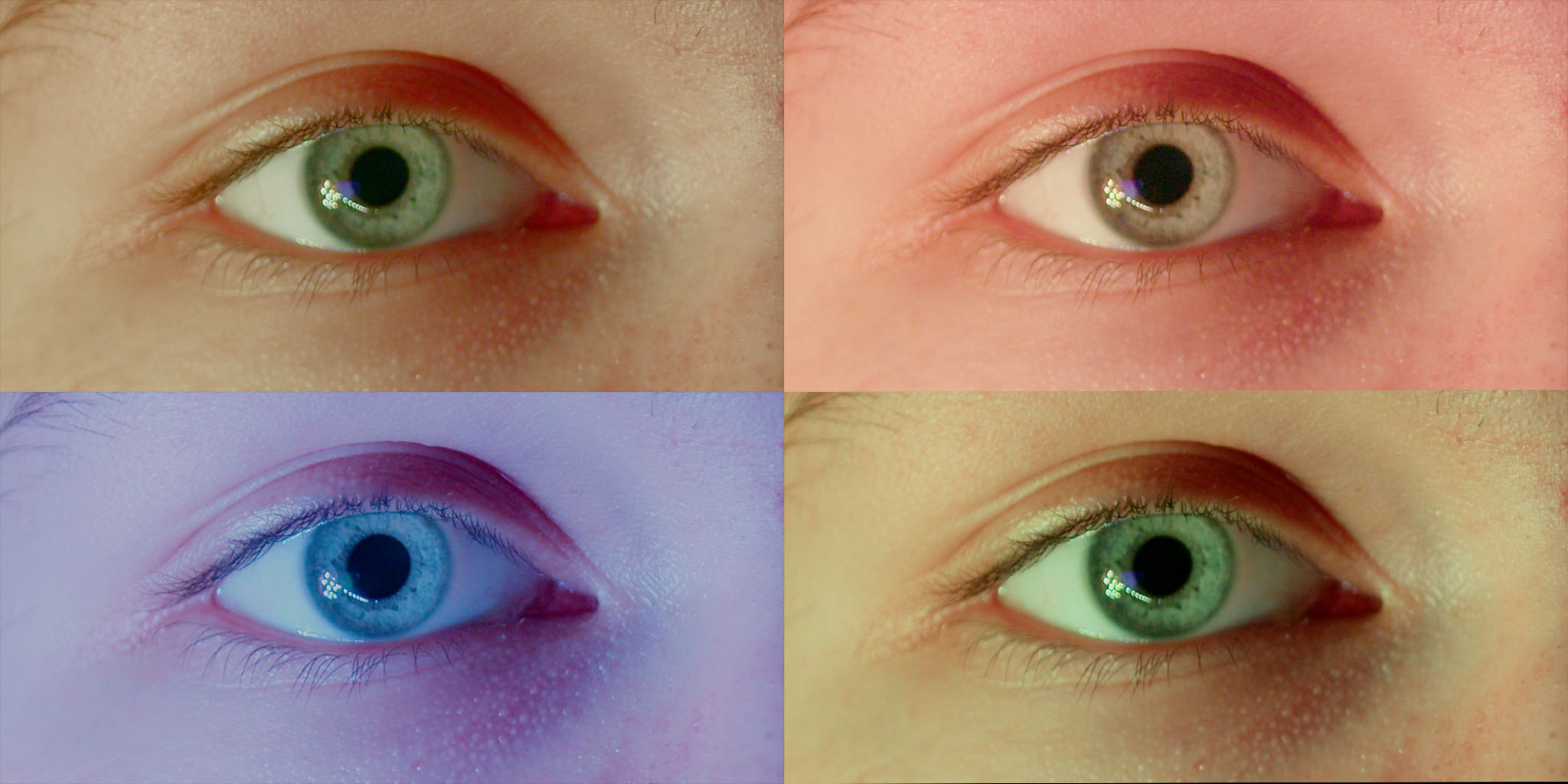
First, though, I wanted to do a test with a subject I had a little more control over: myself. I set up my camera and LED strip, and framed a shot of my eye. I filmed for about a minute at around 30fps to give myself multiple versions of all 20-or-so colors that the light cycled between. Ideally, I would have shot at a higher rate to minimize the movement between frames, but the light didn't change faster than a few times a second so there was no point at shooting any faster. These were some of my test photos:
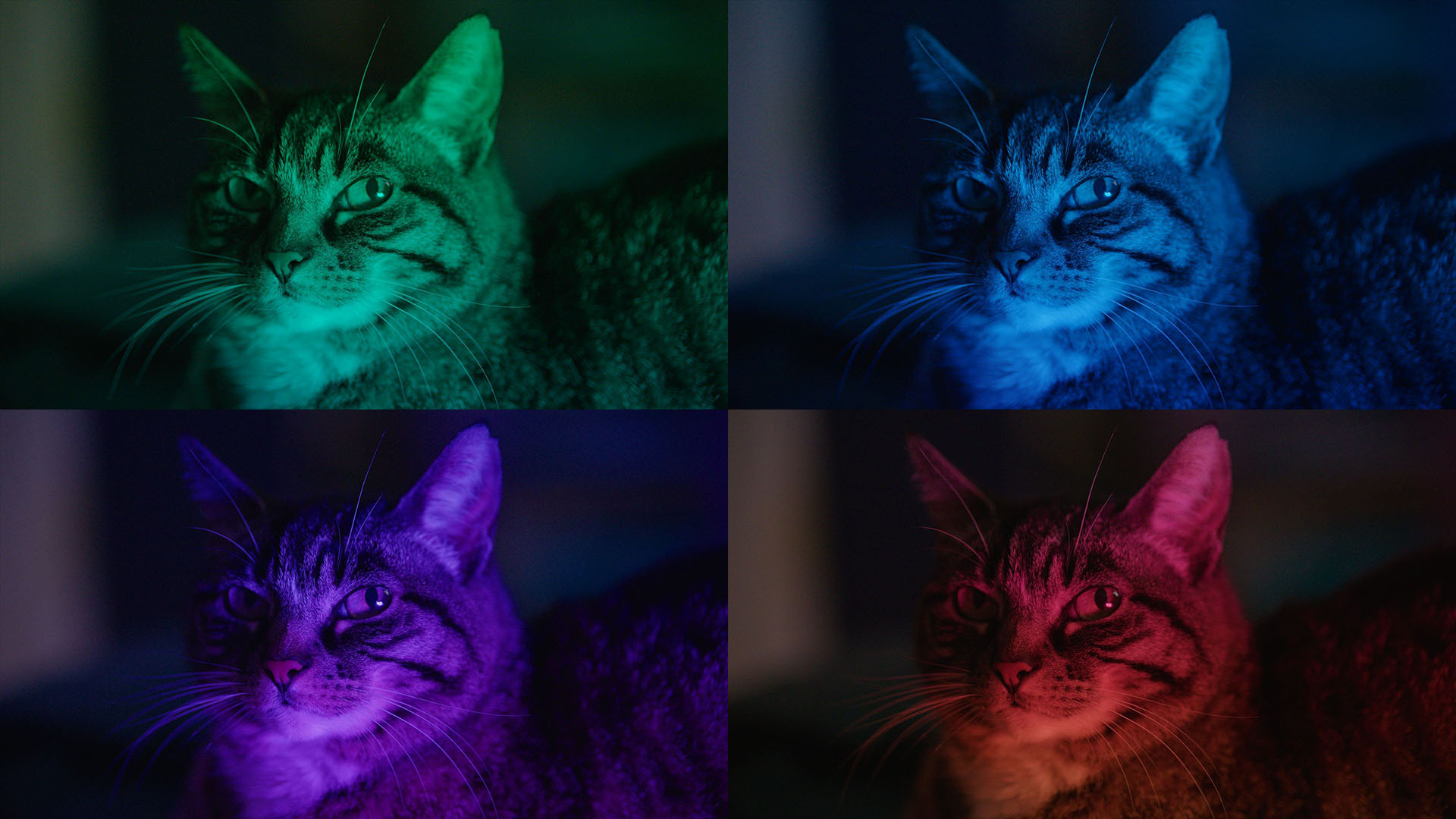
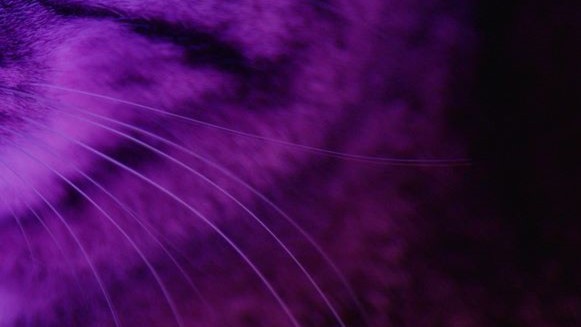
When it came time to shoot with my cat, I had a lot more trouble getting her to stay still than I expected. Ideally, I would be shooting at such a fast frame rate that it wouldn't matter, but I didn't have that luxury. I finally got a few seconds of footage that seemed fine to my eye, and it was only in compositing the four images below that I realized a couple of her whiskers moved in between frames. The image still came out very nicely, and I faded between the two images in that section in such a way that it almost looks like they're two individual whiskers.

A benefit of this method
There's one major benefit of using this method to create images where different parts of the image are lit in different ways that may be difficult or impossible to capture in camera: accurate color. I could have made the image of Sasha pretty easily by shooting one image lit by white light, then hue shifted it a few different ways in Photoshop to get a blue version, a green version, etc. It wouldn't look that different in this example because it's a pretty dark image and the LEDs were the only light source, but in a scenario where there are other light sources that don't change color, or when shooting skin tones which are much easier to spot when graded badly, it's better to shoot with the color of light you want in the result instead of trying to recreate it after the fact.
What's next?
This project was a lot of fun, and hopefully I can a more advanced version of this idea for something in the future. Creating individual images with this method gives diminishing returns because its strengths are much better showcased in video, but there's something to the idea of creating an image where it's important that things like skin tones are accurate and using this method to create a composite. Maybe I'll have an idea that will give me an excuse to revisit this soon. At the end of the day, one of the most interesting parts of this project was finding out that my eyes are much greener than blue in direct light.